When polish is free, effort is the signal

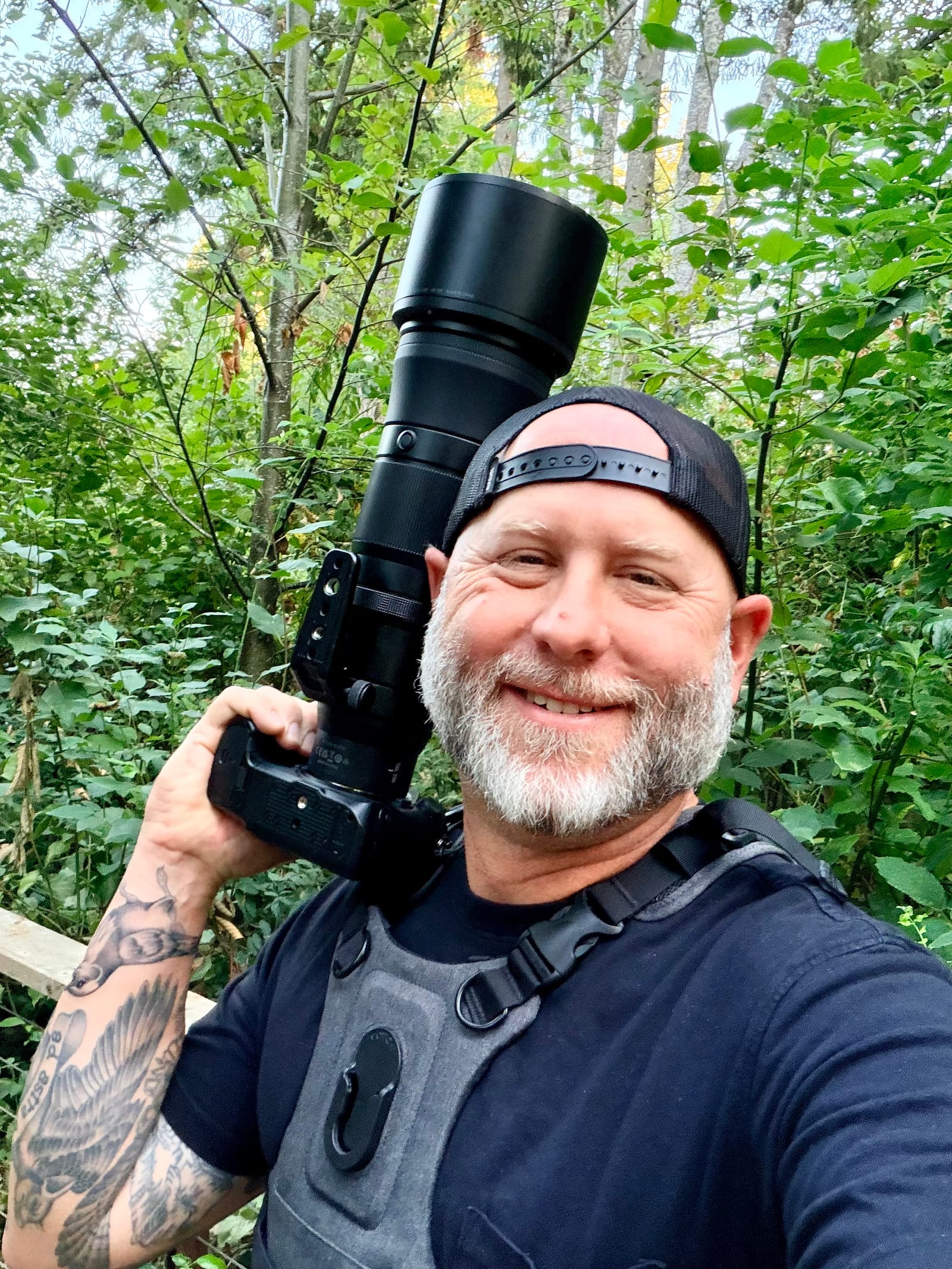
On May 9th of this year, I took my first photo of a bird. It was a joke and a bit of a camera flex for a friend who was really into birds and always takes photos of cool birds with his phone. It was a way to jokingly say “my big camera is better than your iPhone haha.”
Next thing I know, I’m walking in the woods getting chigger bites on my legs in Texas, hiking in the 1 billion percent humidity in Nebraska, wandering the shores of Orange County, and trying not to get lost in the woods all over my home state of Oregon — all for birds.
I am absolutely in love with birds. All I want to do is go look for birds. I’ve realized birding is basically Pokémon for adults, and I am an addict.
In fact, It’s hard to tell whether birding is my new ADHD hyper-fixation or if birds are my entire personality now.
One of the things I love most about birds is that they are masters of sending signals, and for most birds, those signals aren’t cheap.
Take, for example, the Bowerbird, found in Australia. The male builds an elaborate structure from all kinds of materials—bones, twigs, and human junk like bottle caps and other bits of trash. He builds it for one reason: to attract a female mate who shops around, visiting bower after bower and comparing before she chooses. The better the structure, or bower, that he builds, the more likely he is to attract a mate. This building is all effort, a signal to the lady birds that he’s worth choosing.
The bowerbird’s building is a costly signal that’s impossible to fake. In the new human world we find ourselves in, where polish can be easily achieved with some research and a good prompt, it’s hard to know who’s behind the message, the campaign, the post.
People are asking more and more, “Was this made by a human?” and “Is someone actually home?”
Therefore, in this world where polish is free, effort becomes the signal.
The signal that someone is home, that there is a human behind the message, that we haven’t optimized the humanity out of our work.
As nonprofits, we can use countless effort signals to prove we’re here, still worth connecting with, and ready to welcome someone into our home.
A few examples:
- A handwritten note
- A phone call
- A short, personal, unpolished video
- A quick email that references a real-life story
- An in-person meeting
- A small group Zoom gathering
- A dinner meeting
- A home party
- Generally being the kind of person that shows up
Some of these things can be faked, but for now, their counterfeit AI counterparts are easy to spot. AI handwriting is too clean. AI videos still look too polished. Data can be scraped and turned into an email.
But as AI keeps getting better, our signals need to be clearer and clearer. As we inhabit the four spaces of nonprofit engagement — the sidewalk, front porch, living room, kitchen table — what effort signals show we care? That we’re home. That we haven’t lost touch with our humanity?
Oh, by the way, it’s not just my ADHD — it’s my entire personality now.
Next time you see me, talk to me about birds, and you’ll see.
p.s. That California Scrub-Jay on my wrist is brand new today; how about that for a costly effort signal? :)
p.p.s. Yes, the bird I took a photo of on May 9th was indeed a California Scrub-Jay.
p.p.p.s. Here's that photo
Get the next letter in your inbox.
An occasional note on welcome, trust, and the work of belonging. I email only when a new letter goes up — nothing else, and you can unsubscribe in one click.